


How to plan the machining sequence of die casting molds (parts) to reduce the number of clamping operations?
Release Time : 2026-04-22
In the machining of die casting molds (parts), scientifically planning the machining sequence to reduce the number of clamping operations is crucial for improving machining efficiency, ensuring part accuracy, and reducing production costs. A reasonable machining sequence plan requires comprehensive consideration of factors such as part structural characteristics, machining process requirements, equipment performance, and clamping stability. Through systematic analysis and optimization, the number of clamping operations can be minimized.
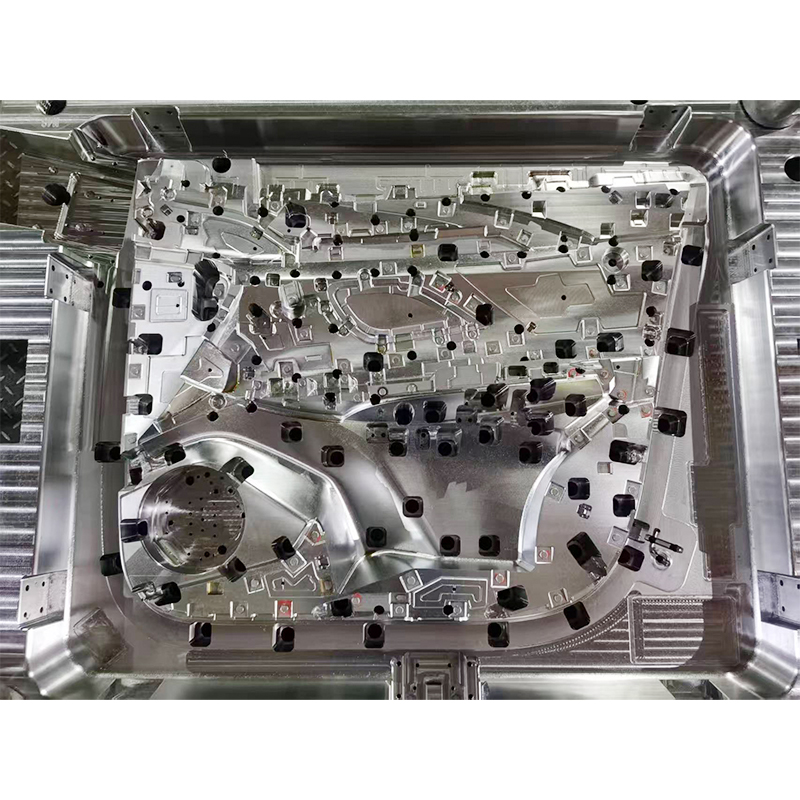
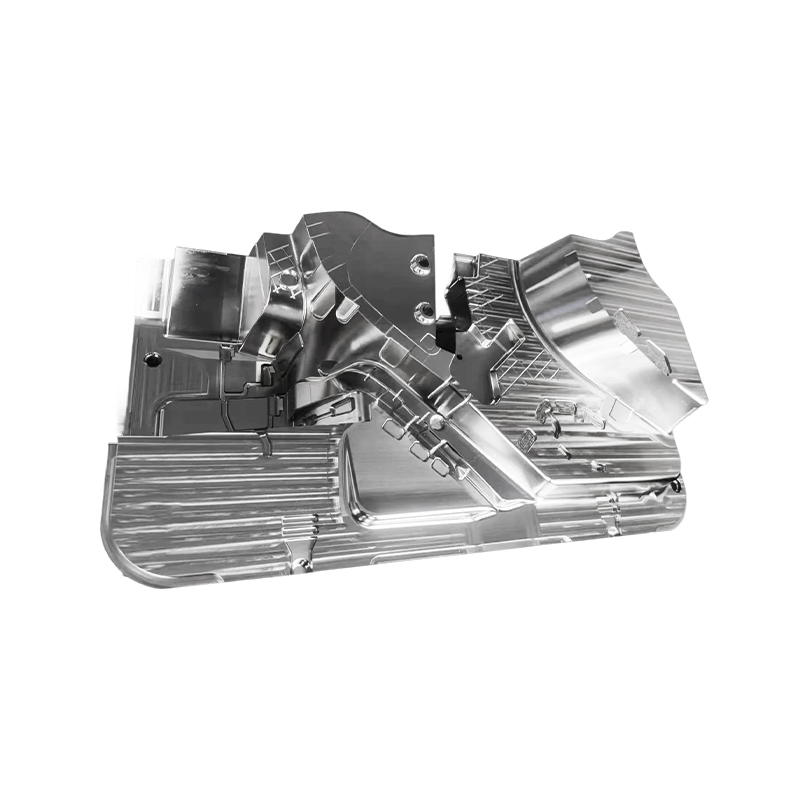
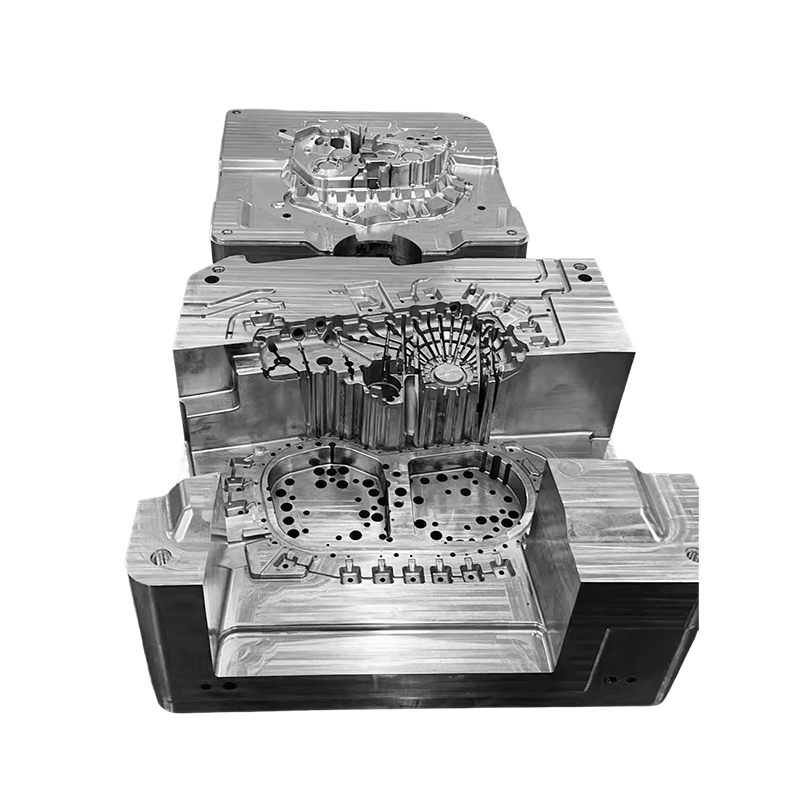
Part structural analysis is the foundation for planning the machining sequence. Die casting molds (parts) typically have complex geometries, containing multiple cavities, hole systems, and feature surfaces. When planning the machining sequence, it is necessary to analyze each structural feature of the part in detail to determine which features can be machined in a single clamping operation and which require multiple clamping operations. For example, for mold parts with multiple cavities, it is advisable to prioritize completing the rough machining of all cavities in a single clamping operation, using the same datum for positioning and machining, avoiding the accumulation of positioning errors caused by multiple clamping operations. Simultaneously, for the machining of hole systems on the part, the sequence of drilling, reaming, and boring operations can be rationally arranged according to the position and dimensional accuracy requirements of the holes, minimizing the number of clamping operations and tool changes.
The continuity of machining processes is crucial for reducing the number of clamping operations. When planning the machining sequence, it's essential to maintain continuity between machining steps to avoid repeated clamping and adjustments. For example, in milling, machining can be performed from rough to finish, and from large areas to small areas. Rough milling removes most of the excess material, providing a good foundation for subsequent finish machining; then semi-finish milling further refines the part's shape and dimensions; finally, finish milling ensures the part's surface quality and dimensional accuracy. Throughout the milling process, the part's clamping position on the machine tool should be kept as constant as possible, and different machining operations can be completed by adjusting the cutting tools and machining parameters, thereby reducing the number of clamping operations.
The principle of consistent datum is an important guarantee for ensuring machining accuracy and reducing the number of clamping operations. In die casting molds (parts) machining, a suitable datum surface should be selected as the positioning datum for the entire machining process, and the consistency of the datum should be maintained in each operation. For example, for parts with multiple machining surfaces, a larger plane can be selected as the datum surface, and this datum surface can be used for positioning and clamping in each operation, including roughing, semi-finishing, and finish machining. This not only ensures the positional accuracy between various machined surfaces but also avoids clamping errors caused by multiple datum changes, thus reducing the number of clamping operations.
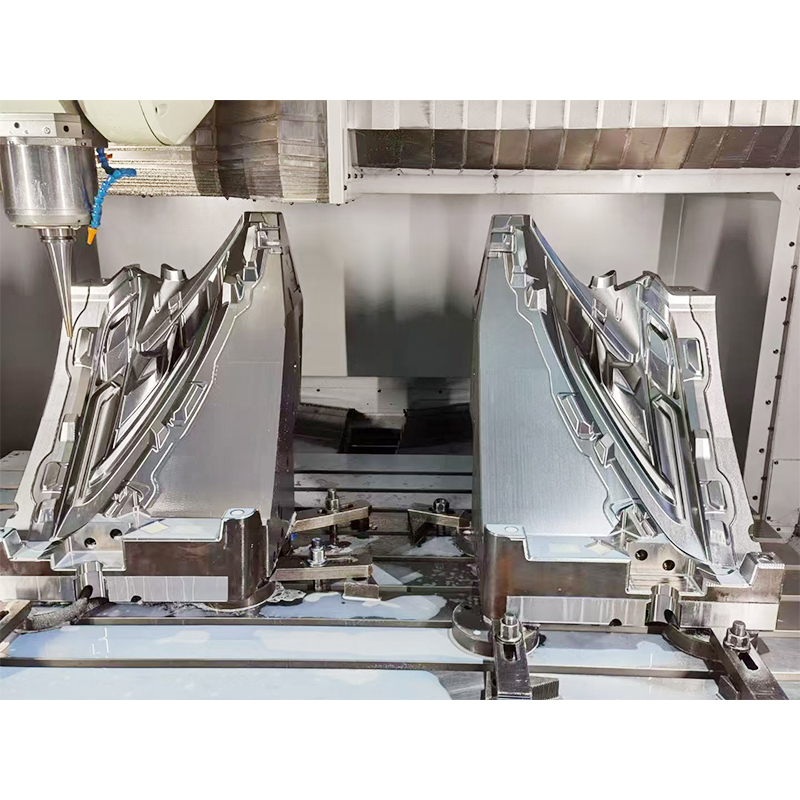
Making good use of machine tool functions and fixture design can also effectively reduce the number of clamping operations. Modern CNC machine tools typically have multi-axis linkage and automatic tool changing functions. When planning the machining sequence, these functions should be fully utilized to complete multiple machining operations in a single clamping. For example, using a five-axis linkage machining center, multiple faces of a part can be milled and drilled in a single clamping, greatly reducing the number of clamping operations. At the same time, designing reasonable fixtures is also key to reducing the number of clamping operations. Fixtures should have sufficient rigidity and stability to accurately position and clamp parts, while also considering the convenience and speed of clamping to reduce clamping time.
A reasonable balance between process concentration and dispersion is also an important aspect of planning the machining sequence. Process concentration refers to completing multiple machining operations at one station, reducing the number of clamping and handling operations; process dispersion involves breaking down a complex machining operation into multiple simple operations, each performed at a different station. When planning the machining sequence, the method of centralized or decentralized processing should be rationally selected based on the specific characteristics of the parts and the capabilities of the processing equipment. For parts with complex structures and high machining accuracy requirements, a centralized processing approach can be adopted, utilizing equipment such as multi-axis machining centers to complete multiple processes at once. For simpler parts or machining processes, a decentralized processing approach can be adopted to improve the utilization rate of processing equipment.
The planning of the machining sequence also needs to consider the smoothness and coordination of the production flow. In the processing of multiple parts and multiple processes, the processing sequence of each part should be rationally arranged to avoid idle equipment or waiting processes. Simultaneously, coordination with subsequent heat treatment, surface treatment, and other processes should be considered to ensure the continuity and efficiency of the entire production flow. By optimizing the production flow, the number of part clamping operations and processing time can be further reduced, thereby improving production efficiency.