


How can the cooling system be optimized to shorten the molding cycle when manufacturing car door panel parts using plastic molds?
Release Time : 2026-04-09
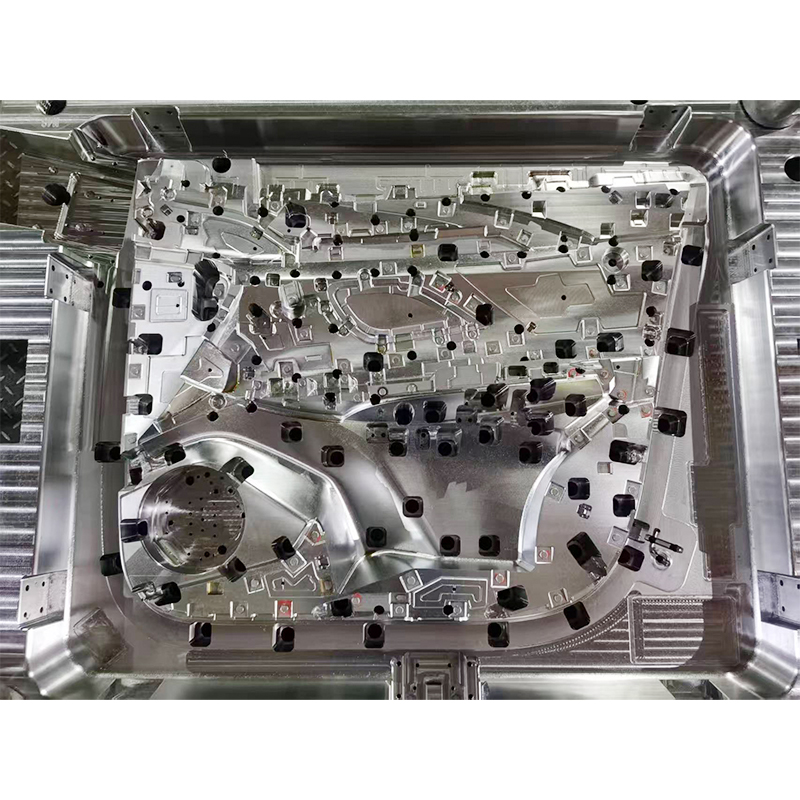
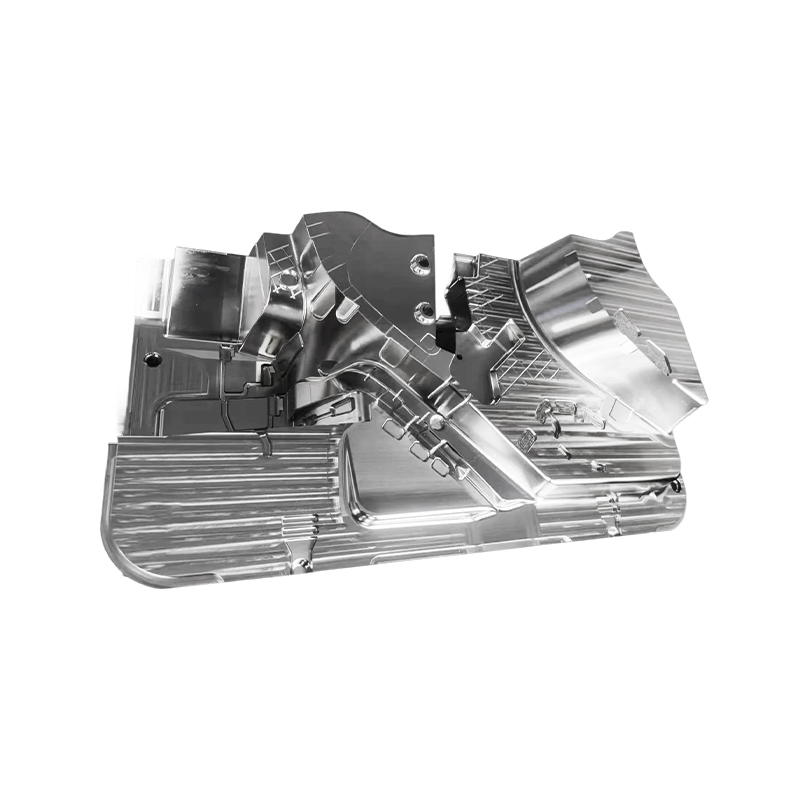
In the manufacturing process of automotive door panel plastic molds, optimizing the cooling system is crucial for shortening the molding cycle and improving production efficiency. As an exterior component, the automotive door panel has a complex structure, including multiple clips, grooves, and areas of uneven thickness, which places higher demands on the design of the cooling system. A reasonable cooling system must ensure uniform temperature distribution on the surfaces of the plastic mold cavity and core, avoiding defects such as product warping, shrinkage marks, or excessive internal stress caused by uneven cooling, thereby maximizing the reduction of the molding cycle while ensuring product quality.
The design of the cooling system should follow the principle of "local cooling," meaning that the cooling channels should be as close as possible to the cavity surface to shorten the heat transfer path and improve heat dissipation efficiency. For complex parts like automotive door panels, traditional straight channels are insufficient for cooling requirements; therefore, conformal cooling channel technology is recommended. Through 3D printing or precision machining, complex channels that conform to the curved surface of the cavity can be manufactured, allowing the cooling medium to directly remove heat, especially in areas with concentrated heat such as thick-walled areas and ribs, significantly improving cooling efficiency and reducing localized high-temperature dead zones.
The layout of the cooling channels must match the shape and thickness of the automotive door panel. In areas with thicker walls or complex structures, such as clips and reinforcing ribs, the channel density should be increased or a dual-loop cooling system should be used to ensure that these areas have the same cooling rate as the thin-walled areas, preventing product deformation due to excessive temperature differences. Simultaneously, cooling channels should avoid passing through the joints of inserts to prevent leakage caused by weaknesses in the plastic mold structure, ensuring the stability of the cooling system and the mold's lifespan.
The selection of the cooling medium is just as important as flow control. Water, as a commonly used cooling medium, has the advantages of low cost and high specific heat capacity, but the water temperature needs to be adjusted according to the characteristics of the automotive door panel material. For example, for crystalline plastics, appropriately increasing the water temperature can accelerate the crystallization process and shorten the cooling time; while for amorphous plastics, the water temperature needs to be lowered to improve heat dissipation efficiency. Furthermore, the diameter and flow rate of the cooling channels need to be designed reasonably to avoid uneven cooling due to excessively low flow rates or mold vibration and noise due to excessively high flow rates. Generally, increasing the channel diameter can increase the flow rate, while using turbulent flow can significantly enhance the heat exchange effect.
The mold's cooling system must be designed in coordination with the ejection mechanism and gating system to avoid interference. For example, cooling channels should avoid critical components such as ejector pins and sleeves to ensure smooth mold operation and reduce downtime for maintenance due to structural conflicts. Simultaneously, the cooling system's inlet and outlet should face the same direction for easy on-site connection and debugging, improving operational efficiency. For large automotive door panel molds, a zoned cooling design can be adopted, further optimizing cooling effects and shortening the overall molding cycle by independently controlling the cooling parameters of each area.
Maintenance and cleaning of the cooling system are equally important. Over time, scale and impurities easily accumulate in the channels, affecting cooling efficiency. Therefore, the maintainability of the channels should be considered during the design phase, such as by incorporating vents and detachable joints for easy regular cleaning and descaling. Furthermore, using corrosion-resistant materials to manufacture the channels can extend the mold's lifespan and reduce production interruptions caused by cooling system malfunctions.
By comprehensively applying conformal cooling channels, rational layout, optimized medium flow, coordinated mold structure, and enhanced maintenance management, the cooling system of automotive door panel plastic molds can achieve efficient and uniform cooling, significantly shortening the molding cycle and improving production efficiency and product quality. This not only helps reduce production costs but also enhances the company's competitive advantage in the market, meeting the automotive industry's continuous demand for efficient and high-quality manufacturing.