


How to ensure car door panel molds maintain micron-level dimensional accuracy on large curved surfaces?
Release Time : 2026-01-15
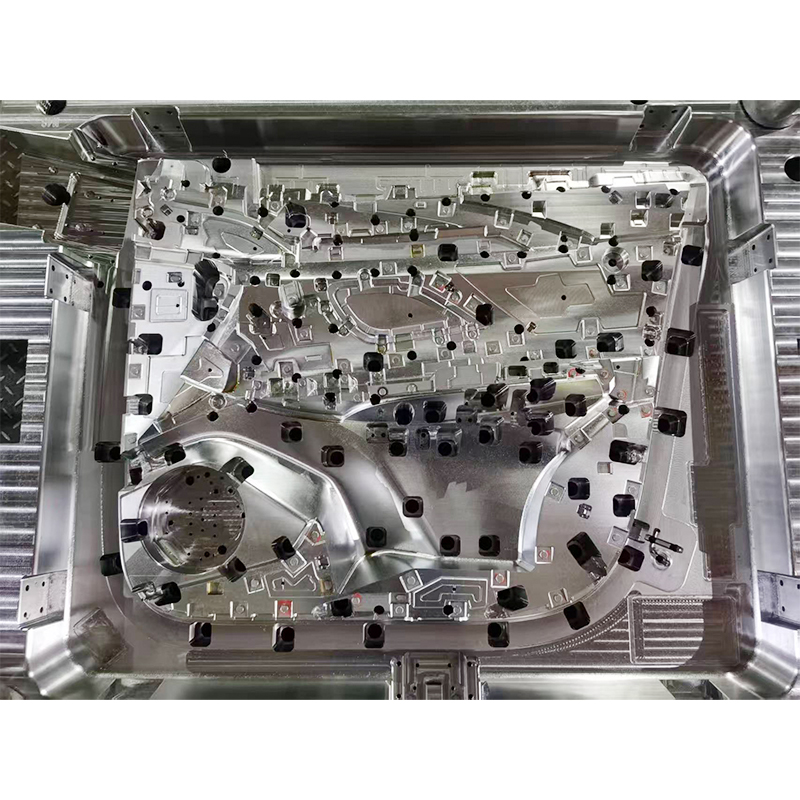
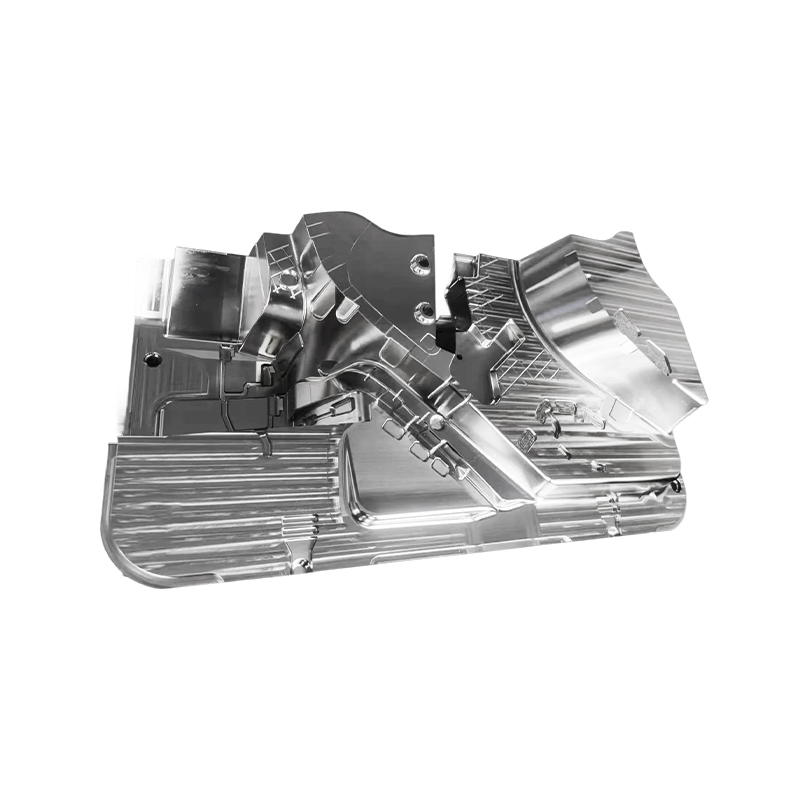
In modern automotive manufacturing, car door panels are no longer simple coverings, but rather sophisticated interior assemblies integrating aesthetics, functionality, and human-machine interaction. Their surfaces often exhibit smooth and complex three-dimensional curves—from the elegant arcs extending from the A-pillar to the C-pillar, to the subtle undulations of the armrest area, and the seamless transitions with windows, speakers, and switch panels. To faithfully translate such a design into a physical entity, the key lies in whether the car door panel mold can maintain micron-level dimensional accuracy on large curved surfaces spanning several square meters. This is not only a test of processing technology but also a comprehensive verification of the collaborative capabilities of materials science, thermodynamic control, and systems engineering.
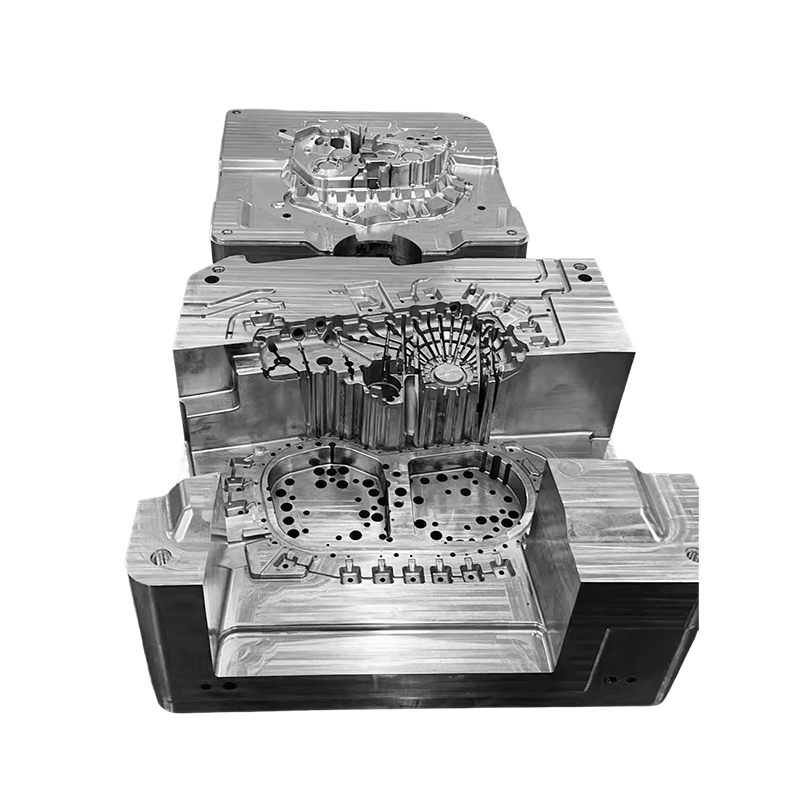
First, a highly stable mold substrate is the physical foundation of precision. Large car door panel molds typically use high-grade pre-hardened steel or age-hardened steel. These materials not only possess excellent mechanical strength but also exhibit extremely low internal stress release and deformation tendency under prolonged use or temperature fluctuations. During the steel smelting and forging stages, internal structural defects are eliminated through processes such as vacuum degassing and homogenization heat treatment, ensuring consistent performance throughout the entire mold blank. This inherent stability provides a reliable starting point for subsequent precision machining.
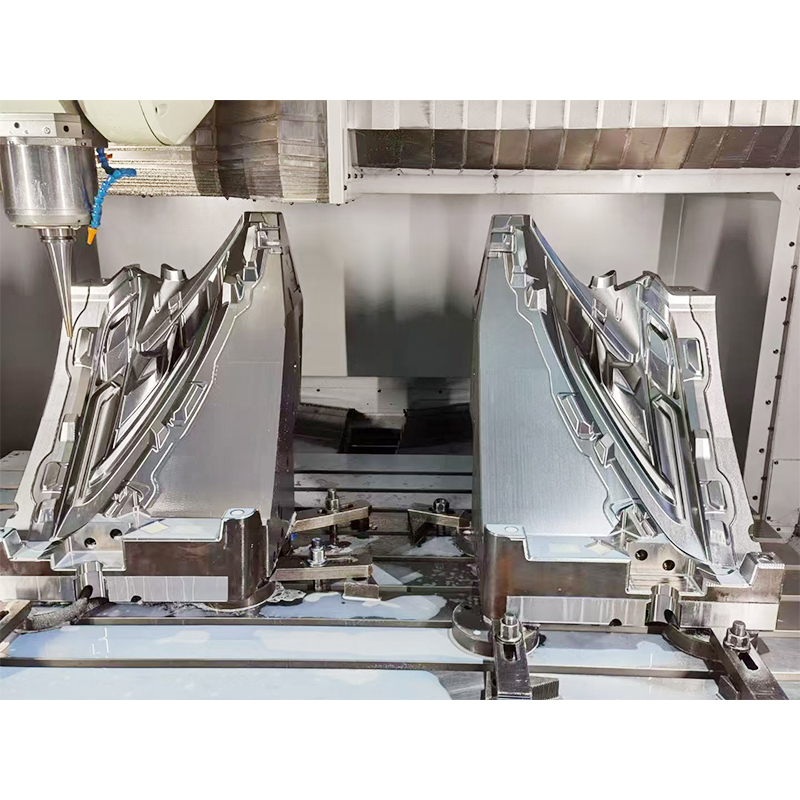
Secondly, advanced machining processes are the core means to achieve precision on complex curved surfaces. Faced with the large span and multi-curvature surface of car door panels, traditional milling struggles to avoid errors caused by tool deflection or vibration. Modern mold manufacturing commonly employs five-axis linkage high-speed machining centers, combined with high-rigidity tools and dynamic path optimization algorithms, ensuring the tool always conforms to the curved surface at the optimal angle, reducing cutting force fluctuations. Simultaneously, for deep cavities, sharp angles, or thin-walled areas, precision electrical discharge machining (EDM) is used for fine-tuning, ensuring that every detail accurately reflects the design intent. The entire machining process is conducted in a temperature-controlled workshop, effectively isolating the metal from the effects of ambient temperature changes on thermal expansion and contraction.
Furthermore, digital simulation and closed-loop correction are integrated throughout the entire process. Before processing, mold flow analysis predicts the shrinkage behavior of plastic during filling and cooling, and compensation is made in advance during the mold design stage. During processing, an online measurement system compares the actual contour with the theoretical model in real time, dynamically adjusting subsequent toolpaths. After processing, a high-precision coordinate measuring machine (CMM) is used to densely sample the entire curved surface, generating a deviation cloud map to guide fine polishing or local trimming. This closed-loop process of "prediction-execution-verification-correction" deeply integrates human experience with digital intelligence, ensuring a high degree of consistency between the final surface and the CAD model.
Furthermore, surface treatment and assembly matching also affect the final accuracy. Car door panel molds often need to replicate specific leather textures or high-gloss effects, requiring the polishing process to accurately transmit microscopic textures without changing the geometric dimensions. Simultaneously, the left and right car door panel molds must be strictly symmetrical to ensure uniform gaps and consistent feel during vehicle assembly. Therefore, manufacturers often employ a paired processing and joint inspection strategy, treating the two sets of molds as a whole for debugging, ensuring matching accuracy from the source.
Ultimately, the micron-level precision of large curved surfaces doesn't stem from a breakthrough in a single technology, but rather from the collaborative evolution of materials, equipment, processes, and data. It's sculpted at the millimeter scale and calibrated at the micron scale, silently safeguarding the perfect fit and visual harmony with every door closure, even in imperceptible details.
Because in the automotive world, true luxury lies hidden in the unseen molds, yet manifests in the car door panels you touch every day. And that perfectly proportioned curve and texture is the gentlest expression of precision manufacturing.
First, a highly stable mold substrate is the physical foundation of precision. Large car door panel molds typically use high-grade pre-hardened steel or age-hardened steel. These materials not only possess excellent mechanical strength but also exhibit extremely low internal stress release and deformation tendency under prolonged use or temperature fluctuations. During the steel smelting and forging stages, internal structural defects are eliminated through processes such as vacuum degassing and homogenization heat treatment, ensuring consistent performance throughout the entire mold blank. This inherent stability provides a reliable starting point for subsequent precision machining.
Secondly, advanced machining processes are the core means to achieve precision on complex curved surfaces. Faced with the large span and multi-curvature surface of car door panels, traditional milling struggles to avoid errors caused by tool deflection or vibration. Modern mold manufacturing commonly employs five-axis linkage high-speed machining centers, combined with high-rigidity tools and dynamic path optimization algorithms, ensuring the tool always conforms to the curved surface at the optimal angle, reducing cutting force fluctuations. Simultaneously, for deep cavities, sharp angles, or thin-walled areas, precision electrical discharge machining (EDM) is used for fine-tuning, ensuring that every detail accurately reflects the design intent. The entire machining process is conducted in a temperature-controlled workshop, effectively isolating the metal from the effects of ambient temperature changes on thermal expansion and contraction.
Furthermore, digital simulation and closed-loop correction are integrated throughout the entire process. Before processing, mold flow analysis predicts the shrinkage behavior of plastic during filling and cooling, and compensation is made in advance during the mold design stage. During processing, an online measurement system compares the actual contour with the theoretical model in real time, dynamically adjusting subsequent toolpaths. After processing, a high-precision coordinate measuring machine (CMM) is used to densely sample the entire curved surface, generating a deviation cloud map to guide fine polishing or local trimming. This closed-loop process of "prediction-execution-verification-correction" deeply integrates human experience with digital intelligence, ensuring a high degree of consistency between the final surface and the CAD model.
Furthermore, surface treatment and assembly matching also affect the final accuracy. Car door panel molds often need to replicate specific leather textures or high-gloss effects, requiring the polishing process to accurately transmit microscopic textures without changing the geometric dimensions. Simultaneously, the left and right car door panel molds must be strictly symmetrical to ensure uniform gaps and consistent feel during vehicle assembly. Therefore, manufacturers often employ a paired processing and joint inspection strategy, treating the two sets of molds as a whole for debugging, ensuring matching accuracy from the source.
Ultimately, the micron-level precision of large curved surfaces doesn't stem from a breakthrough in a single technology, but rather from the collaborative evolution of materials, equipment, processes, and data. It's sculpted at the millimeter scale and calibrated at the micron scale, silently safeguarding the perfect fit and visual harmony with every door closure, even in imperceptible details.
Because in the automotive world, true luxury lies hidden in the unseen molds, yet manifests in the car door panels you touch every day. And that perfectly proportioned curve and texture is the gentlest expression of precision manufacturing.