


How does car door panel mold processing define the boundaries of cabin aesthetics and function through precision shaping?
Release Time : 2026-02-25
In the modern automotive industry, the interior is not only the core carrier of the driving experience but also a direct reflection of brand character and craftsmanship. As one of the most prominent and structurally complex components of the cabin, car door panels integrate various functional elements such as speaker covers, armrests, storage compartments, switch panels, and decorative trim. Their smoothness of shape, surface texture, and assembly precision directly determine the user's first impression of the overall vehicle quality. Behind all this lies the support of high-precision plastic molds—car door panel mold processing is the key bridge that transforms design drawings into physical components, achieving a perfect unity of functional integration and aesthetic expression with millimeter-level precision and artistic detail control.
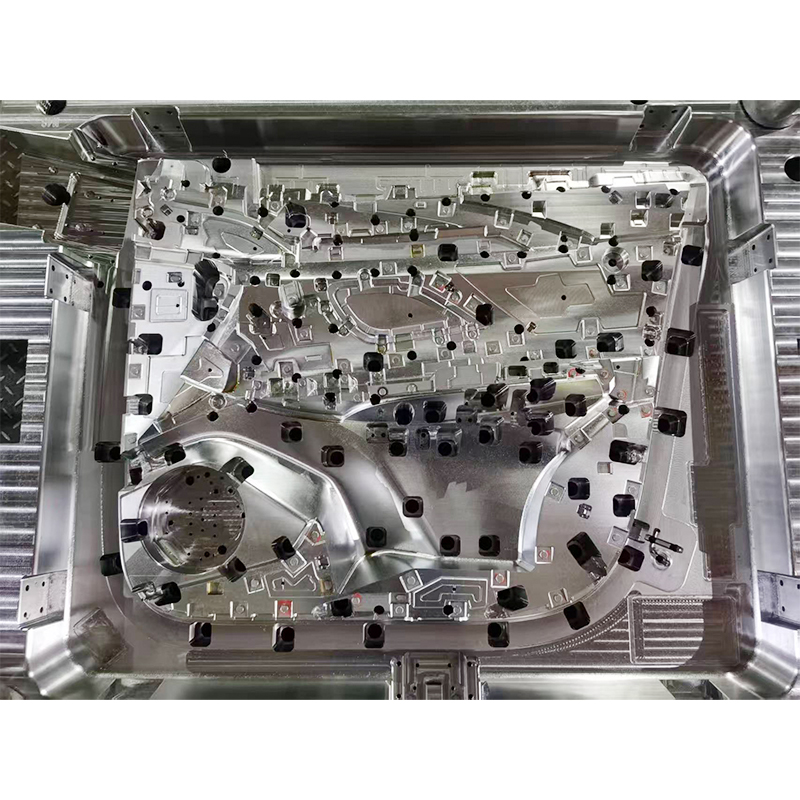
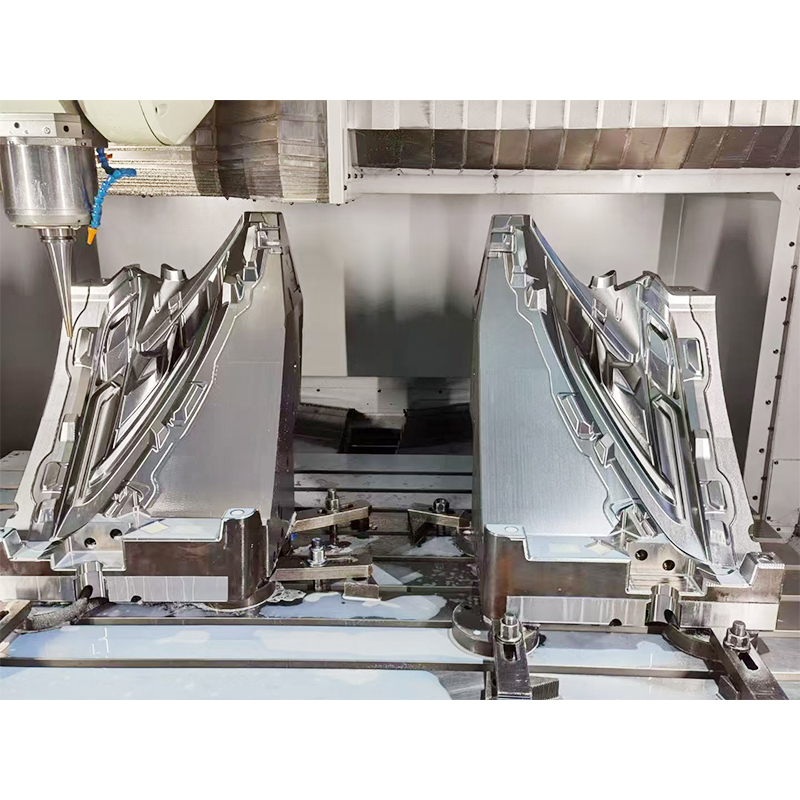
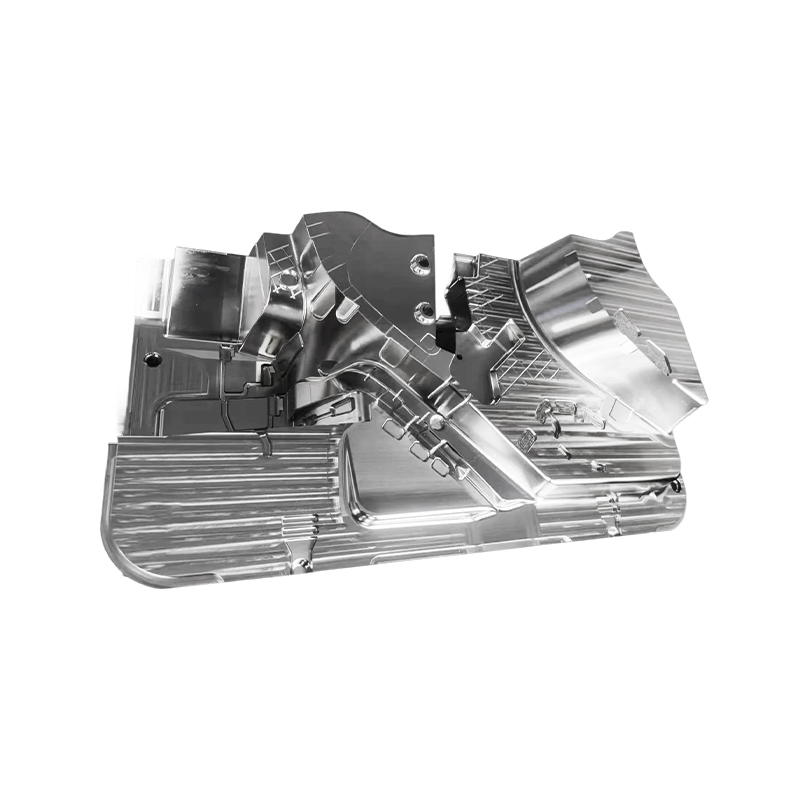
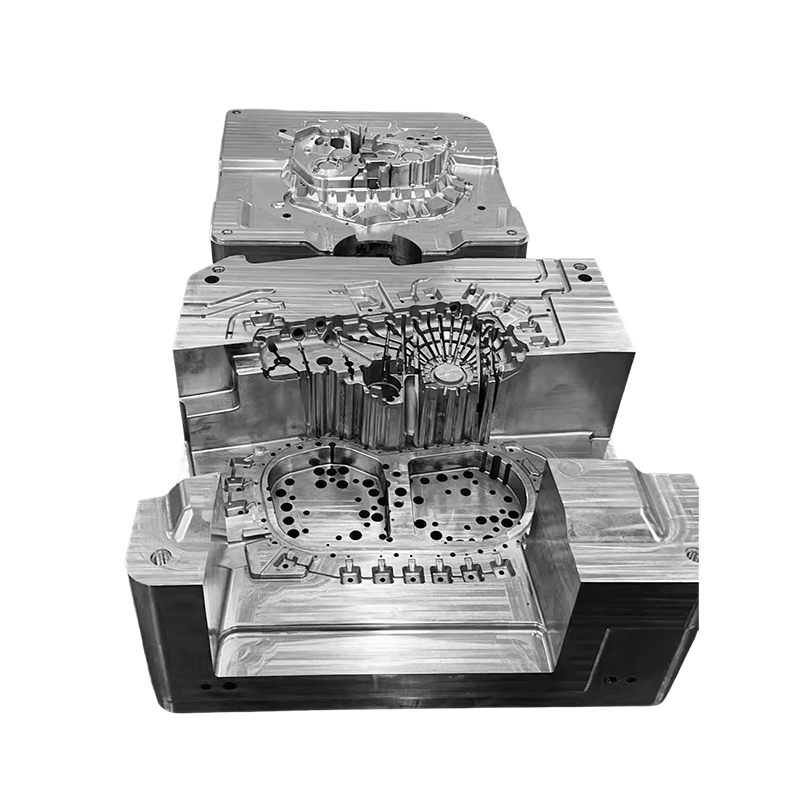
The core challenge of car door panel mold processing lies in the complexity of its structure and the stringent requirements for surface quality. Door panels are typically produced using large-scale injection molding, requiring molds to accommodate features such as deep cavities, multiple curved surfaces, thin walls, and reinforcing ribs, while ensuring uniform and consistent finishes such as leather textures, high gloss, or matte. Therefore, mold manufacturing relies on advanced processes such as five-axis high-speed milling, precision EDM, and mirror polishing to perform micron-level finishing on the mold core. Every chamfer, every parting line, and every ejector pin position undergoes repeated simulation and optimization to avoid defects such as shrinkage, weld lines, and flash, ensuring stability even after thousands of openings and closings in mass production.
Material selection and hot runner system design are equally crucial. High-quality mold steel possesses high hardness, wear resistance, and good thermal conductivity, adapting to long-term high-temperature and high-pressure cycling; hot runner technology ensures that molten plastic uniformly fills complex cavities, reducing waste and improving molding efficiency. For high-end door panels with IMD (In-Mold Decoration) or dual-color injection molding, the mold also needs to integrate precision positioning and a secondary mold closing mechanism to achieve seamless integration of different materials or colors, making the function buttons and decorative panels appear as one.
A deeper value lies in the fact that door panel molds are a physical converter of "ergonomics" and "emotional design." The streamlined contours sketched by designers require precise replication through molds to achieve their elegant curves; the storage spaces and operational logic planned by engineers rely on the coordinated movements of sliders, angled ejectors, and core-pulling mechanisms within the mold. When a user's finger lightly touches the door panel armrest, they feel ergonomic support; when their gaze sweeps across the trim seams, they see a flawless, refined finish—these experiences all stem from countless tolerance calculations and trial mold corrections behind the mold.
Under the trend of intelligent manufacturing, mold processing has also incorporated digital elements. From 3D modeling and mold flow analysis to CNC programming and online inspection, the entire process is data-driven, significantly shortening the development cycle; intelligent sensing systems monitor mold temperature and pressure in real time, providing early warnings of potential risks. This "virtual verification + physical realization" model allows innovative designs to be implemented efficiently, supporting automakers in quickly responding to market changes.
Furthermore, the durability of molds is directly related to the overall vehicle cost and sustainability. A high-quality door panel mold can stably produce hundreds of thousands of qualified parts, reducing downtime and maintenance frequency; the modular design concept facilitates partial replacement, extending the overall lifespan. This not only reduces manufacturing costs but also minimizes resource waste, aligning with the concept of green production.
Although car door panel molds are hidden deep within the factory workshop, they are the shapers of the cabin's soul. They use the coolness of steel to bear the warmth of design, and the precise interlocking to reproduce the flow of creativity. When a car door closes, and your fingertips glide across the smooth door panel, that silent texture is the culmination of months of painstaking work by the mold makers—because true luxury lies not in ostentatious features, but in every inch of tangible detail.
The core challenge of car door panel mold processing lies in the complexity of its structure and the stringent requirements for surface quality. Door panels are typically produced using large-scale injection molding, requiring molds to accommodate features such as deep cavities, multiple curved surfaces, thin walls, and reinforcing ribs, while ensuring uniform and consistent finishes such as leather textures, high gloss, or matte. Therefore, mold manufacturing relies on advanced processes such as five-axis high-speed milling, precision EDM, and mirror polishing to perform micron-level finishing on the mold core. Every chamfer, every parting line, and every ejector pin position undergoes repeated simulation and optimization to avoid defects such as shrinkage, weld lines, and flash, ensuring stability even after thousands of openings and closings in mass production.
Material selection and hot runner system design are equally crucial. High-quality mold steel possesses high hardness, wear resistance, and good thermal conductivity, adapting to long-term high-temperature and high-pressure cycling; hot runner technology ensures that molten plastic uniformly fills complex cavities, reducing waste and improving molding efficiency. For high-end door panels with IMD (In-Mold Decoration) or dual-color injection molding, the mold also needs to integrate precision positioning and a secondary mold closing mechanism to achieve seamless integration of different materials or colors, making the function buttons and decorative panels appear as one.
A deeper value lies in the fact that door panel molds are a physical converter of "ergonomics" and "emotional design." The streamlined contours sketched by designers require precise replication through molds to achieve their elegant curves; the storage spaces and operational logic planned by engineers rely on the coordinated movements of sliders, angled ejectors, and core-pulling mechanisms within the mold. When a user's finger lightly touches the door panel armrest, they feel ergonomic support; when their gaze sweeps across the trim seams, they see a flawless, refined finish—these experiences all stem from countless tolerance calculations and trial mold corrections behind the mold.
Under the trend of intelligent manufacturing, mold processing has also incorporated digital elements. From 3D modeling and mold flow analysis to CNC programming and online inspection, the entire process is data-driven, significantly shortening the development cycle; intelligent sensing systems monitor mold temperature and pressure in real time, providing early warnings of potential risks. This "virtual verification + physical realization" model allows innovative designs to be implemented efficiently, supporting automakers in quickly responding to market changes.
Furthermore, the durability of molds is directly related to the overall vehicle cost and sustainability. A high-quality door panel mold can stably produce hundreds of thousands of qualified parts, reducing downtime and maintenance frequency; the modular design concept facilitates partial replacement, extending the overall lifespan. This not only reduces manufacturing costs but also minimizes resource waste, aligning with the concept of green production.
Although car door panel molds are hidden deep within the factory workshop, they are the shapers of the cabin's soul. They use the coolness of steel to bear the warmth of design, and the precise interlocking to reproduce the flow of creativity. When a car door closes, and your fingertips glide across the smooth door panel, that silent texture is the culmination of months of painstaking work by the mold makers—because true luxury lies not in ostentatious features, but in every inch of tangible detail.