


How to design a reasonable cooling water circuit to improve the cooling effect of car light mold processing?
Release Time : 2026-03-10
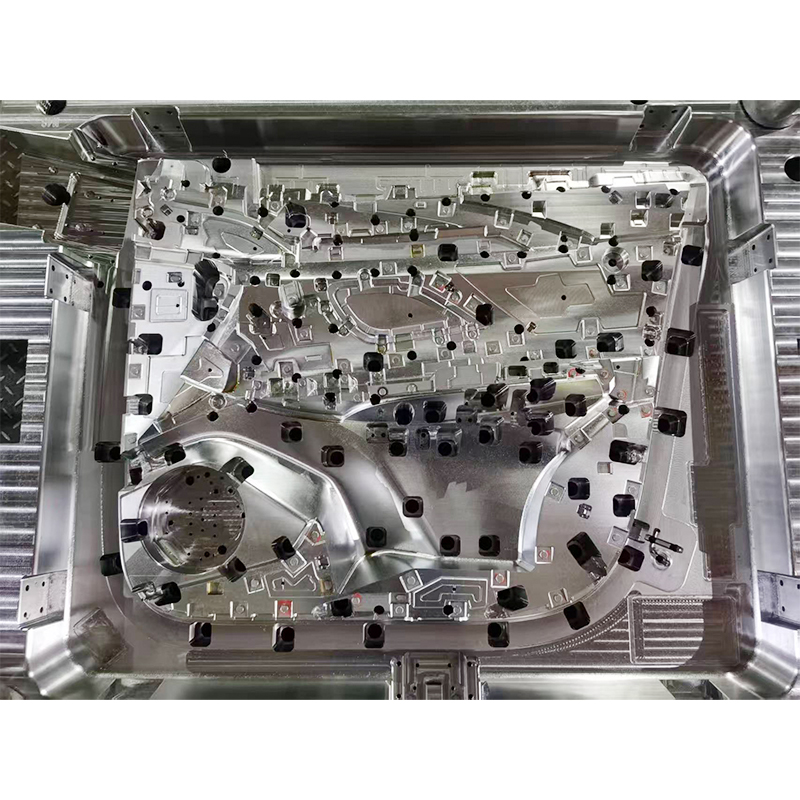
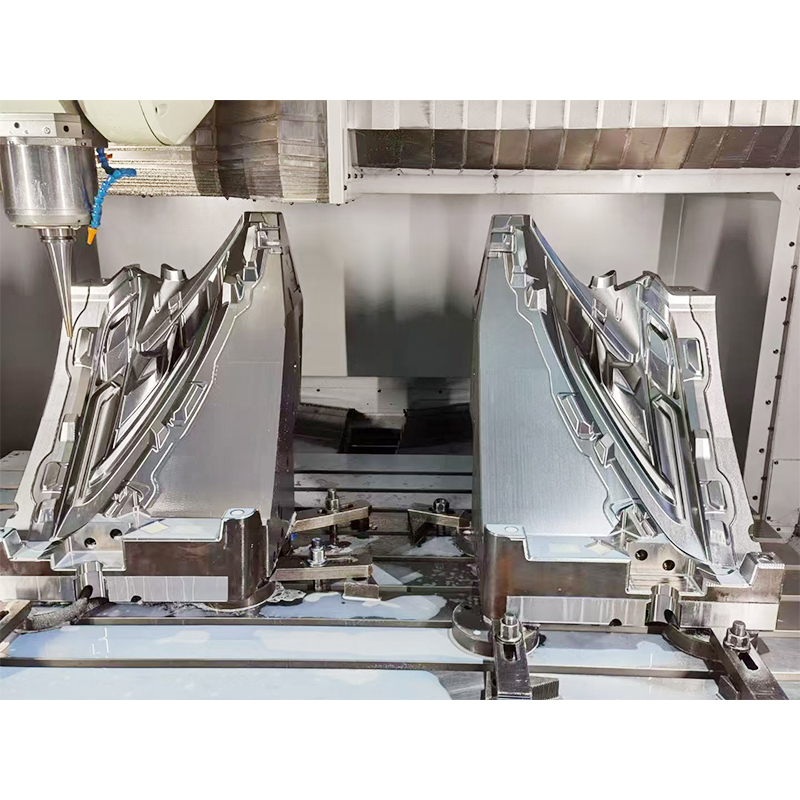
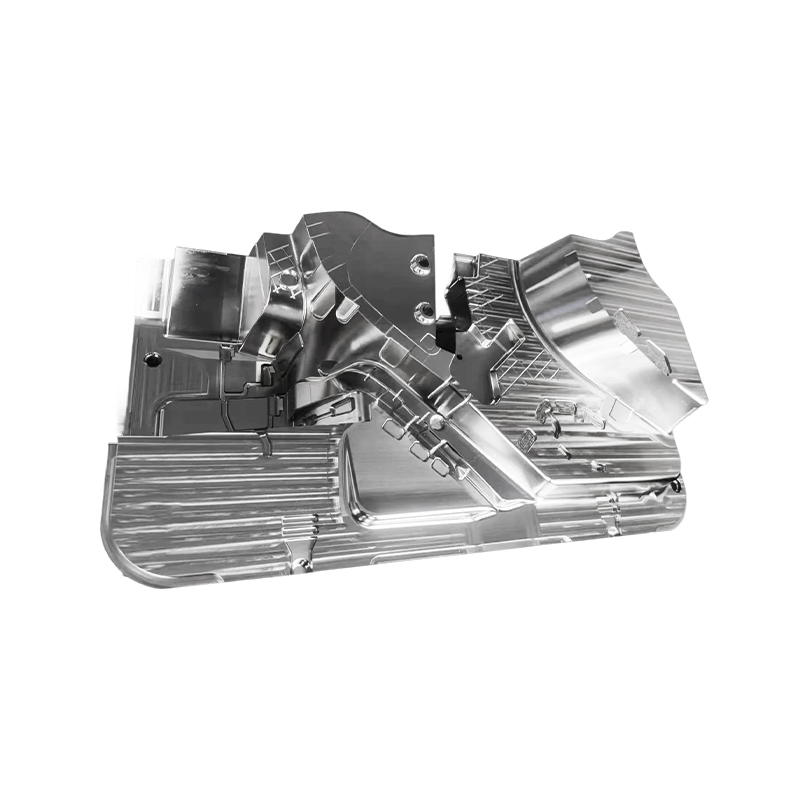
In car light mold manufacturing, the design of the cooling water system is a core element affecting the mold's cooling effect. Its rationality directly impacts the molding quality of the plastic parts, production efficiency, and mold life. Car light plastic parts typically have complex structures, uneven wall thicknesses, and high appearance requirements. For example, lenses need to be high-gloss and flawless, light distribution lenses need optical-grade surfaces, and lamp housings need high-precision assembly positions. These characteristics place stringent demands on the uniformity, response speed, and local control capabilities of the cooling system. Therefore, the design of the cooling water system requires comprehensive optimization from multiple dimensions, including water channel layout, structural form, flow parameters, and temperature control strategies.
The layout of the cooling water system should follow the principles of "closeness to the cavity, uniform distribution, and focused reinforcement." The water channels should be as close as possible to the mold cavity surface to reduce thermal resistance and improve heat transfer efficiency, but interference with the cavity, ejector pins, sliders, and other structures must be avoided. For areas with significant differences in wall thickness, such as the reinforcing ribs of the lamp housing and the thick-walled light-guiding area of the lens, cooling needs to be enhanced by increasing the water channel density or setting up local cooling wells to prevent warping deformation caused by uneven shrinkage. Simultaneously, the cooling channels should be arranged along the shrinkage direction of the plastic part to accommodate the material's shrinkage characteristics and reduce internal stress. Furthermore, sensitive areas such as weld lines and gates should be avoided to prevent excessively rapid cooling that could lead to poor welding or gate residue.
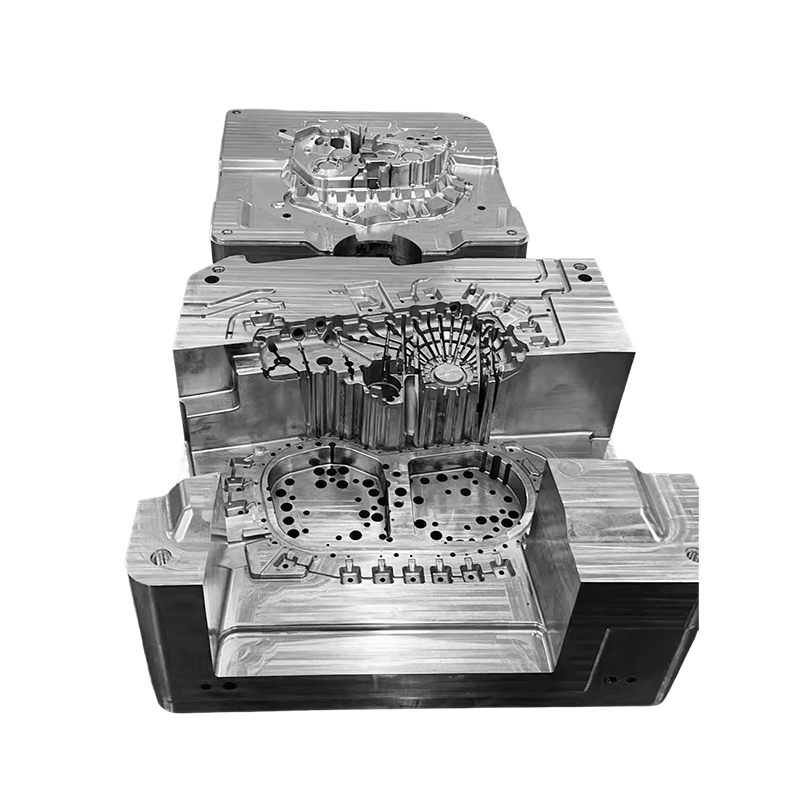
The structure of the cooling channels needs to be flexibly selected based on the shape of the plastic part and the mold structure. Common cooling systems include direct-flow, circulating, jet, and baffle systems, while car light molds tend to use a combination of vertical water pipes + inclined water pipes + baffle-type water wells. Vertical water pipes are suitable for the sides of the mold, simplifying processing and ensuring uniform cooling; inclined water pipes can better conform to irregularly shaped cavities, reducing cooling blind spots; baffle-type water wells improve local heat transfer efficiency by increasing the turbulence of the cooling medium. For example, in thick-walled light guide molds, conformal water channel designs can be arranged along the contour of the plastic part, maximizing cooling efficiency through topology optimization, significantly shortening the molding cycle and improving surface quality compared to traditional straight-through water channels.
The flow state of the cooling medium has a decisive influence on heat transfer efficiency. The design must ensure the coolant is in a turbulent state within the water channels to enhance thermal convection. Turbulence can be achieved by optimizing the water channel diameter, flow velocity, and channel shape. For example, reducing the water channel diameter or increasing the flow velocity can increase the Reynolds number and promote turbulence formation. Simultaneously, the temperature difference between the cooling water inlet and outlet must be controlled to avoid uneven mold temperature caused by excessive temperature differences. Furthermore, the selection of the cooling medium must consider the mold material and the characteristics of the plastic part. For instance, high thermal conductivity copper alloys can be used for localized cooling, while water-based coolants remain the mainstream choice for car light molds due to their large heat capacity and low cost.
The mold temperature control system must work in conjunction with the cooling water channels. By independently controlling the temperatures of the moving and stationary molds, the shrinkage behavior of the plastic part can be optimized, reducing deformation caused by temperature differences. For example, in LED headlight lens molds, the stationary mold temperature needs to be slightly higher than the moving mold temperature to compensate for the shrinkage of the thick-walled area of the lens and avoid dimensional deviations at the assembly position. In addition, the temperature control system must have a rapid response capability to meet the requirements of high-speed injection molding processes. By integrating a mold temperature controller and sensors, real-time monitoring and dynamic adjustment of mold temperature can be achieved, ensuring the stability of cooling performance.
The machining precision and surface quality of the cooling water channels are equally crucial. The roughness of the inner wall of the water channels affects fluid resistance and heat transfer efficiency; therefore, precision machining processes, such as deep hole drilling and EDM, are required to ensure dimensional accuracy and surface finish. Simultaneously, a sealing test of the water channels is necessary to prevent coolant leakage that could lead to mold corrosion or plastic part contamination. During mold maintenance, scale and impurities within the water channels must be cleaned regularly to maintain long-term cooling effectiveness.
The design of the cooling water channels for car lights molds must balance efficiency and quality. By optimizing the layout, structure, flow state, and temperature control strategies, a balance between cooling uniformity, response speed, and localized control can be achieved. A well-designed cooling system not only improves the appearance and dimensional accuracy of plastic parts but also shortens the molding cycle and reduces scrap rates, providing a key guarantee for the efficient and stable production of car lights.